25.11.2025
PRESS RELEASE
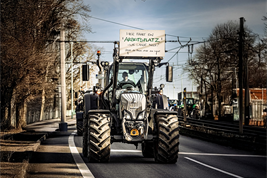
What is the value of nature? For many people, nature means forests, meadows, biodiversity – but how is it represented in policy? A new study published in People and Nature analyzed how different values of nature are reflected in the European Union’s Common Agricultural Policy (CAP). The study, conducted by the Leibniz Centre for Agricultural Landscape Research (ZALF), found that economic perspectives dominate, while other views such as nature as a habitat or cultural identity are underrepresented. This could undermine the effectiveness of agricultural policy.
The researchers analyzed key policy documents from both the EU and Germany and examined which types of nature values are represented. These include instrumental values (nature as a resource), intrinsic values (nature as valuable in itself) and relational values (nature as part of cultural identity or human–nature relationships). The study categorized these into four narrative pathways: Green Economy, Nature Protection, Earth Stewardship and Degrowth. The EU documents showed a clear preference for the Green Economy approach, which links environmental goals with economic growth. German policy documents, however, reflected stronger elements of Nature Protection and Earth Stewardship.
“Our study shows that the EU focuses primarily on economic arguments, while additional, equally important human–nature connections are often overlooked,” says Iven Froese, lead author of the study from ZALF. “This is problematic, because many farmers feel a close bond with nature and see themselves as stewards of the land, helping to preserve the natural basis for their work, such as biodiversity or soil health. Policy should reflect that.”
While all four narrative pathways were present in the policy documents, the EU’s approach clearly prioritizes economic values. In contrast, German strategy papers more often reflect ethical and relationship-based perspectives. The study concludes that policies will be more legitimate and effective if they recognize the diversity of nature values. Regional policymaking – like in Germany – can offer opportunities to emphasize these alternative values. Such a shift may lead to more equitable and effective environmental action.
Funding
Diese This study was funded by the biodiversa+ project ‘BridgingVALUES’, which is co-funded by the German Federal Ministry of Research, Technology and Space, Grant #03LW0330.
 Press release as PDF
Further Information
DOI link to the publication:
https://doi.org/10.1002/pan3.70186
Text disclaimer:
This is a summary created with the help of artificial intelligence based on the original publication: Froese, I. & Loft, L. (2025).
Unravelling nature’s values in EU agricultural policy: A critical discourse analysis. People and Nature. https://doi.org/10.1002/pan3.70186 Published Open Access under the license CC BY 4.0:
https://creativecommons.org/licenses/by/4.0/. The text was carefully reviewed and edited according to ZALF’s
AI guideline.