Back to the homepage of the Innovation Centre for Agricultural System Transformation
Contribution to ZALF research
The central research questions of the Innovation Centre for Agricultural System Transformation (IAT) are:
- Co-development of land use systems: How to develop sustainable land use practices that are in balance with environmental and economic needs in cooperation with local actors.
- Co-development of value networks: How can agricultural value networks and chains be transformed to increase the efficiency and sustainability of regional agricultural systems?
- Participatory evaluation: How can the transformational impact and environmental benefits of solutions applied in the field laboratory be evaluated in a participatory way?
- Analysis and development of Living Labs: What approach contributes to the success and impact of Living Labs? How can the impact of Living Labs be measured and communicated in an agricultural context? What approaches can help improve the effectiveness and transferability of living labs?
- Developing methods for monitoring, data analysis and modelling: What new methods and tools for data collection and analysis can be developed and applied to monitor and model transformation processes in Living Labs?
Working Groups
The IAT consists of 17 research and service groups spread across the four campuses in Müncheberg, Witzenhausen, Giessen and Geisenheim. They are led by jointly appointed professors or ZALF tenure track researchers. They include 15 research groups, two service groups plus the IAT coordination office. All working groups operate in all five of the IAT's Living Labs. The 17 working groups form six methodological focus areas. They facilitate scientific and methodological exchange and consolidation, while research cooperation takes place in use cases (medium term thematic challenges) across focus areas, campuses and Living Labs.
Thematic area: "Co-Design of Land Use Systems"
Co-design of agroecological crop and grassland systems (Müncheberg)
Agroecological systems are essential for boosting resilience and diversification within agricultural landscapes. This working group concentrates on designing land use systems that enhance biodiversity, ecosystem services, and resource efficiency under dynamic climatic and social conditions. It targets practical application of agroecological principles—functional diversity, reduced inputs, and landscape integration—to transform conventional systems. Collaborating transdisciplinarily with farmers and advisors in Living Labs in Brandenburg and Hesse, the group explores perennial crops, agroforestry, agri-photovoltaics, and renatured peatland cultivation. By integrating ecological and socioeconomic data, and employing participatory design and trials, it evaluates real-world systems for scalability, aiming at transformational pathways through scenario development and spatial analysis.
Co-design of organic horticulture (Witzenhausen)
Climate-resilient, ecological vegetable systems form the core of this working group, emphasizing sustainability, economic viability, and regional integration. The goal is to diversify and stabilize horticultural systems to achieve ecological objectives while fostering robust value chains for producers and consumers. Key research areas include mulch-based cultivation, diversified crop rotations, and low-input systems, optimizing yield stability, soil health, and biodiversity. Collaborating with organic farmers and food sector stakeholders in Brandenburg and Hesse, the group employs a Living Lab approach to develop systems both in research stations and real farms. Methodologies encompass agronomic trials, ecosystem service assessments, and economic analyses, focusing on trade-offs like labour intensity and profitability. Additionally, the influence of policies and procurement strategies on sustainable innovation uptake is explored.
Co-design of animal based mixed farming systems (Witzenhausen)
The functional coupling of arable farming, grassland and animal husbandry systems plays a key role in circular agricultural systems. It allows ecological processes of nutrient cycling to be utilised for sustainable intensification and, in line with a one-health approach, aims to simultaneously improve animal welfare, biodiversity and soil health. The working group co-develops, tests, validates and outscales solutions for innovative animal based mixed cropping systems in Living Labs, using transdisciplinary research approaches.
Co-designed mixed viticulture systems (Geisenheim)
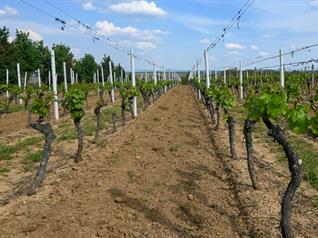
The development of multifunctional and climate-resilient viticulture systems is at the forefront of this group's research. By integrating mixed cropping systems including vegetables, herbs, livestock, and agri-photovoltais the aim is to enhance viticulture's ecological benefits, reduce environmental risks, and maintain economic viability despite climate change. Research focuses on transforming viticulture to improve biodiversity, soil health, and water retention, stabilize yields, and generate new income sources. The group collaborates closely with practitioners and stakeholders in wine-growing regions like Hesse to co-design these systems in a Living Lab setting. Methods include field trials and participatory system development, leveraging sensors and field robotics for environmental monitoring. Political and market conditions are assessed to facilitate sustainable transformation. Coordination with other working groups supports scenario modelling and resilience assessments.
Co-designed nature-based solutions in wine-growing landscapes (Geisenheim)
The group investigates nature-based solutions for wine-growing regions to improve climate change mitigation and adaptation. By developing integrated land management strategies, they aim to boost ecosystem resilience while enhancing wine-growing productivity. Collaborating with practitioners, strategies include agroforestry, intercropping, and wetland integration, tailored to vineyard needs. Operating in Living Labs across Hesse and Brandenburg, they focus on co-design and evaluation, using participatory design, field trials, and assessments with ecological and socioeconomic indicators. Spatial planning and climate modeling support empirical work, ensuring outcomes are practical and scalable. Coordination with regional institutions and other groups targets effective implementation across wine-growing landscapes.
Thematic area: "Co-development of Value Creation Networks"
Co-designed value networks for new products (Müncheberg)
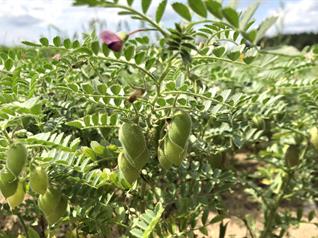
The working group examines how new products and ecosystem services from sustainable land use can be recognised, rewarded and supported through viable, regionally embedded value networks. It goes beyond linear value chains by bringing together farmers, processors, technology and service providers, retailers, consumers, policy actors and financiers. The group focuses on cases such as paludiculture biomass, agroforestry products, plant-based proteins, renewable materials and nature-related finance, where market development must be linked with landscape outcomes including climate mitigation, biodiversity, soil health and water management. Through Living Labs in Brandenburg and other regions, the group co-designs business models, incentives, monitoring arrangements and forms of collaboration with practice partners. Its transdisciplinary research combines stakeholder engagement with economic and governance analysis to understand how networks emerge, how risks and benefits are shared, and how successful models can be scaled.
Contact:
Dr. Cheng Chen
Co-design of strategies for sustainable entrepreneurship (Witzenhausen)
This working group examines how entrepreneurship in agriculture can drive sustainability and systemic change by aligning business models and innovation strategies with ecological goals, economic viability, and social values. The central focus is embedding sustainable entrepreneurship in agricultural practices and supporting change at farm and regional levels through new stakeholder groups, governance frameworks, and value-oriented innovations. The group is distinguished by its practical emphasis, collaborating closely with farms, rural entrepreneurs, and civil society. Living Labs in Brandenburg and Hesse are utilized for experimentation and learning. Using sustainability research, institutional economics, and business model innovation, they employ participatory methods, case studies, and scenario development to foster entrepreneurial processes tailored to local needs.
Co-designed resilient agricultural value networks (Giessen)
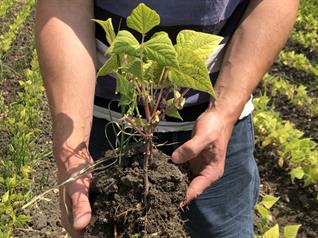
Socio-ecological shocks like climate change and supply bottlenecks challenge agricultural value chains. This working group investigates enhancing resilience by fostering collaborative relationships among producers, processors, retailers, and civil society. It aims to identify and strengthen resilience capacities - robustness, adaptability, and transformability - within these networks to maintain core functions and drive systemic change. Emphasizing joint learning and innovation, the approach is multiscale, addressing both farm-level realities and broader governance and market frameworks. In Brandenburg and Hesse, regional Living Labs facilitate collaboration with agricultural stakeholders to ensure practical relevance. The methodology combines participatory research, empirical case studies, stakeholder interviews, scenario development, and resilience frameworks, enriched by political economy and sustainability insights to understand power dynamics and institutional influences on resilience.
Thematic area: "Modelling and Assessment"
Participatory resilience assessment of farming systems (Müncheberg)
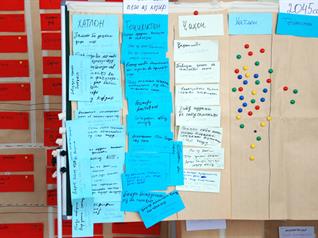
In an uncertain future, ensuring the resilience of farming systems is critical for safeguarding their long-term viability. The working group assesses the resilience of existing and envisioned farming systems from a systemic perspective, considering the diversity of interrelated social, ecological, political, and economic stresses and drivers of change and how they affect individual farms. Participatory assessment frameworks are developed and applied that integrate the perspectives and knowledge of farmers and other stakeholders. Besides methodological innovation, the working group generates systems and target knowledge on the robustness, adaptability, and transformability of farms and farming systems, as well as strategies for transitioning to more desirable states. It examines how resilience intersects with questions of sustainability and justice, addressing potential conflicts and trade-offs between different goals in the transformations envisioned in the Living Labs.
Contact:
Michael Spies
Participatory sustainability assessment of animal husbandry (Giessen)
Animal husbandry faces the challenge of combining the production of high-quality food with animal welfare and environmental standards, while at the same time ensuring that farms have a decent income and fair working conditions. Any innovation in animal husbandry systems has to be assessed against these requirements. The working group will use a combination of qualitative, participatory and quantitative research methods to assess innovations developed in IAT Living Labs for their sustainability impacts. Assessments are based on the preferences of different stakeholders, include environmental, social, economic and governance perspectives, and take into account indirect effects such as rebound or spill-over.
Integrated impact assessment modelling for Living Labs (Müncheberg)
This working group concentrates on integrated impact assessment modeling for transformation-oriented agricultural interventions. It aims to understand how agricultural changes affect ecological, social, and economic outcomes by structuring assessments to address complexity and diverse stakeholder views. Emphasizing a variety of methodologies, the group combines quantitative modeling, indicators, and qualitative approaches to capture the breadth of impacts. Collaborating with other groups and Living Labs, they integrate impact assessments into innovation processes, ensuring support for accountability and adaptive learning. This approach aligns with IAT's commitment to evidence-based, transparent system transformation.
Thematic area: "Data Analytics and Monitoring in IAT Living Labs"
AI-based landscape data analysis (Giessen)
In IAT Living Labs, complex socio-ecological interactions triggered by agricultural management and value networks are investigated using diverse data types, data qualities, and spatial references. Only the combined use of data enables holistic and systemic understanding of such interactions. This working group will advance the research area of data science in agricultural landscapes with a particular emphasis on Living Lab research. A central focus will be placed on the collection, use, and integration of data from agricultural Living Labs using innovative methodologies. Additionally, the group will address the generalisability of the findings and how AI technologies can enhance this process.
Mobile agri-environmental sensors (Giessen)
Sustainable and resilient agricultural landscape systems require digital and technological innovations as well as social and ecological advances. High-resolution spatio-temporal sensor technologies provide data for real-time decisions in agricultural practice and enable precise monitoring of environmental conditions and impacts. This working group will advance research focused on developing, integrating, and deploying mobile and autonomous sensors for agri-environmental monitoring and decision making in agricultural landscapes. Key indicators to be recorded include greenhouse gas emissions, carbon storage, soil quality, water balance, and biodiversity. The research also encompasses data processing and quality assurance of information from diverse sources within the Living Labs.
Thematic area: "Living Lab Research and Science-Policy"
Transformation analysis Living Labs (Müncheberg)
The working group investigates the design and implementation of Living Labs for transforming agricultural systems, aiming to establish them as effective infrastructure for transdisciplinary research and social learning. Central to their mission is exploring how Living Labs can be structured to enable joint creation and testing of innovations at the landscape level. The research focuses on identifying the institutional, spatial, and methodological configurations that best support collaboration among researchers, farmers, civil society, and policymakers. Unique to this group is its focus on Living Labs themselves as research objects. The group applies design-based innovation research and systems thinking to study inclusivity, power relations, and governance mechanisms. Collaborating closely with other working groups, they contribute to the landscape-related environments in Brandenburg and Hesse, aligning with European Living Lab standards.
Success factors for Living Lab research (Witzenhausen)
This working group investigates the essential institutional, social, and procedural factors that ensure agricultural Living Labs achieve long-term success and transformative effects. Key areas of focus are trust, skills, stakeholder networks, and collaboration between science and practice. It seeks to understand how Living Labs drive transformation, define and measure success, and the role of science as an active participant. The group employs network and multi-stage impact analyses over various timeframes, collaborating with other groups and the IAT coordination office to craft evaluation methods, impact indicators, and capacity-building strategies. Through conceptual work, empirical studies, and meta-analyses, the group aims to advance transformation research theoretically and methodologically.
Service Working Groups
Data and modelling infrastructures for Living Labs (Müncheberg)
The central aim of the working group is to empower IAT researchers to better manage their research data and software over the full scientific life cycle. To facilitate this, the working group provides Data Stewardship and Research Software Engineering support services, alongside needs-based infrastructure and training, ultimately encouraging IAT working groups to develop as communities of practice for FAIR and Open Science. Complementing this, the working group develops capacity in collaborative system modelling — connecting participatory methods with cutting-edge computational and data-driven approaches. Finally, the group contributes to closing the loop between research and stakeholders in the Living Labs through the development of user-centred data visualization and decision support platforms.
Kontakt: Dr. Benjamin Black
Social-ecological-monitoring (Müncheberg)
This working group designs and implements socio-ecological monitoring frameworks to support participative research in Living Labs. It provides structured, long-term data on ecological and social dynamics, and monitors Living Lab activities, as well as the shorter-term success of real-world experimentation. Together with other working groups and stakeholders, the group integrates quantitative and qualitative monitoring across ecological and social dimensions - from farm to landscape scale. The group supports sampling protocols, ensures data linkage and quality, conducts data analysis, and provides indicators for the IAT and its partners. By tailoring its services to the IAT's transformation and Living Lab priorities, it ensures that research and co-design are based on systematically collected, context-sensitive socio-economic and natural science data.
Contact:
Dr. Holger Döring
IAT Coordination Office
This working group serves as a central hub for coordinating the IAT and its Living Labs, promoting the involvement of stakeholders, transdisciplinary research, and strategic learning across regions and disciplines. It supports the IAT working groups and committees, coordinates the development of Living Labs and the process of flexible research funds. Five regional network managers, each responsible for one Living Lab region, maintain stakeholder engagement, support participatory formats, and identify innovation needs in close cooperation with science and practice. As part of the working group, the IAT Academy will offer cross-disciplinary learning and dialogue formats such as workshops, mentoring programs, international exchanges, and hackathons. In collaboration with ZALF's communication and transfer teams, they will promote transdisciplinary skills, the advancement of young talents, and engagement in politics will be promoted.
Contact: Dr. Nina Hagemann
Funded by:
Back to the homepage of the Innovation Centre for Agricultural System Transformation