22.01.2026
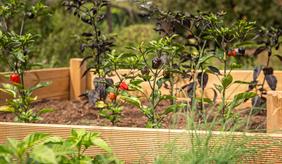
A publication from the FOODCITYBOOST research project supports local authorities and leaders in urban agriculture with recommendations and best practice examples for urban agriculture policy and governance. The Leibniz Centre for Agricultural Landscape Research lead the development of this catalog of measures.
With the help of a comprehensive catalog of innovative governance practices, cities and regions are better equipped to develop sustainable, inclusive, and resilient solutions to their governance challenges. The recommendations aim, among other things, to stabilize regional food supplies and strengthen social cohesion and the local economy through multi-stakeholder approaches and policy integration.
The catalog offers concrete recommendations for the practical implementation of urban agriculture based on research, data, and empirical findings from the FOODCITYBOOST living labs. The target audience is politicians, decision-makers, planners, advocacy groups, and others engaged with local agrifood systems who want to promote sustainable urban agrifood systems.
The European Union-funded international research project FOODCITYBOOST will run until 2027 and aims to understand the megatrends and governance models that influence the development of urban agriculture in the EU. In addition, a sustainability assessment tool will be developed to analyze the environmental, social, and economic impacts. Furthermore, the project aims to expand knowledge about the current and future impacts of urban agriculture and support policy discourse on targeted EU interventions. The Leibniz Centre for Agricultural Landscape Research (ZALF) is one of twenty international project partners of FOODCITYBOOST.
Further information:
Text disclaimer:
This text has been partially created with the help of artificial intelligence (LibreKI). The text was carefully reviewed and edited according to ZALF’s
KI-Regelungen.