21.11.2025
Why do many people in Tanzania still cook with firewood or charcoal, even when electricity or gas is available? A new study published in the journal Energy for Sustainable Development provides answers. Researchers from the Leibniz Centre for Agricultural Landscape Research (ZALF) contributed significantly to this work. The findings clearly show: higher household income does not automatically lead to a switch to modern cooking fuels. Instead, many households continue to use a mix of traditional and modern fuels – even when cleaner alternatives are accessible.
A new study shows that simply making electricity or gas available is not enough. What matters most is whether households can afford these energy sources, whether supply is reliable – and whether the fuels are culturally accepted. Using nationally representative survey data from Tanzania, the researchers found that households often combine multiple fuels rather than replacing traditional ones completely.
Electricity but still cooking with wood – why?
Despite numerous development projects and information campaigns, nearly 90% of Tanzanian households still use traditional fuels such as firewood or charcoal for cooking. This practice causes serious health and environmental damage – including air pollution, deforestation, and time loss due to fuel collection.
Three main factors play a key role:
- Access – Is the fuel available nearby?
- Affordability – Can households afford to use it regularly?
- Reliability – Are there frequent power cuts or delivery issues with gas?
Clean energy alone is not enough
The study found clear differences between urban and rural areas. Urban households are more likely to use gas or electricity – but often alongside charcoal. In rural areas, most people still rely on firewood. The idea that households naturally switch to cleaner fuels as incomes rise – the so-called energy ladder – does not apply in many cases.
What needs to happen now?
The researchers recommend policy measures tailored to everyday realities. These include financial support for clean cookstoves, investments in reliable supply chains for LPG (liquefied petroleum gas), and culturally sensitive education campaigns. In rural areas especially, practical and affordable solutions are needed to reduce dependence on traditional fuels.
Project Partners
- Humboldt University of Berlin
- University of Dodoma, Tanzania
- Leibniz Centre for Agricultural Landscape Research (ZALF)
- Alexander von Humboldt Foundation
Further Information
https://doi.org/10.1016/j.esd.2025.101854
Note on this text
This text is an AI-generated summary of the original study: Tunguhole, J., Ückert, G., Gebre, G.G., Robischon, M., & Sieber, S. (2025). Household cooking energy transition in Tanzania: The interplay between energy accessibility, affordability and reliability in the shift to clean fuels. Energy for Sustainable Development, 89, 101854.
https://doi.org/10.1016/j.esd.2025.101854. Published Open Access under the CC BY 4.0 license:
https://creativecommons.org/licenses/by/4.0/. The text was carefully reviewed and edited according to ZALF’s AI communication guidelines.
Bildmaterial
Download image
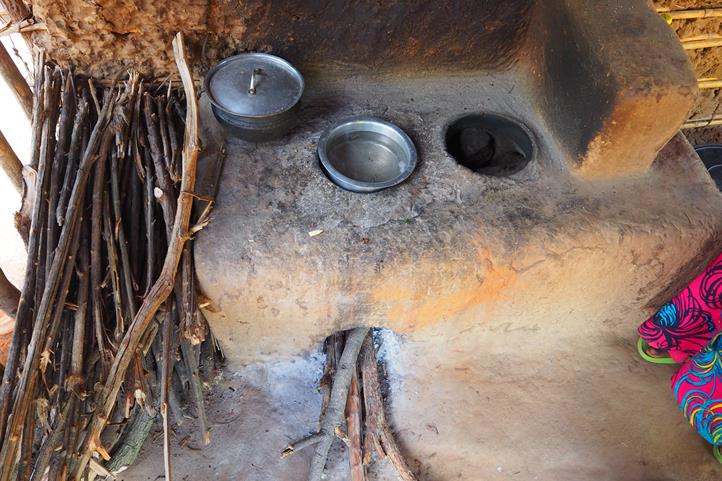
Improved cooking stoves in Tanzania, DIY with local material from mud, bricks and pipes, transition to cleaner cooking via chimney and proper combustion of dry wood in a chamber under controlled supply air (we added an extra air intake). The picture can be used for editorial purposes by stating the source: © G. Uckert / Trans-SEC.