02.02.2026
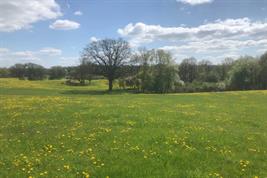
Impact of intensive land use on ecological processes in soils:
Even after three years of land use reduction, grassland soils have not recovered their potential to take up methane (CH₄) from the atmosphere. This is the result of a new study published in the journal Soil Biology and Biochemistry, led by the Leibniz Centre for Agricultural Landscape Research (ZALF).
Methane is one of the most powerful greenhouse gases: Over a 20-year period, it has around 80 times the global warming potential of carbon dioxide. Well-aerated soils, especially in grassland ecosystems, can act as methane sinks thanks to methane-consuming microorganisms (methanotrophs). However, this function is significantly weakened by intensive management practices. The study investigated whether this sink function can be restored through extensification measures in the short term.
Three years are not enough
The research was conducted on 45 grassland sites in three regions of Germany. At each site, one subplot had its land use intensity drastically reduced: no fertilization, no grazing, and only one mowing event per year. These subplots were compared with adjacent, intensively managed reference plots. The study also included 15 additional sites with a long-term history of low-intensity management as a benchmark for each of the three study regions.
While in the sites with recently reduced management practices, the soil bulk density decreased, the water content changed, and the abundance of methane-producing microorganisms (methanogens) was reduced, the capacity to take up methane from the atmosphere did not recover. In particular, the atmospheric methane-oxidizing microbes (methanotrophs) remained suppressed. Meanwhile, plots with historically low land use intensity consistently showed a greater potential to take up methane across regions.
“Our results show that any potential recovery of the highly specialized methanotrophs responsible for taking up methane from the atmosphere takes a long time,” says
ZALF researcher Nils Volles, author of the study. “However, the changes we observed provide clues about possible mechanisms that could promote the restoration of this sink function.”
What makes grassland soil a methane sink?
At the core of the study were the so-called methanotrophs, which can convert methane into less harmful carbon dioxide. The researchers were particularly interested in the group known as Upland Soil Cluster γ (USCγ) methanotrophs which can take up atmospheric methane even at extremely low concentrations. These bacteria were more abundant on the historically low land use sites, a sign that such long-term low-intensity management might allow the responsible microbes, and methane the sink function to recover.
Why this matters for climate policy
The study shows how strongly ecological processes depend on the intensity of land use – and how long a possible recovery may take. For researchers, this means that long-term studies are needed to realistically assess how quickly soils can regain their natural functions. For practitioners and policymakers, the implication is clear: climate mitigation measures in agriculture must be implemented early and planned over long timeframes.
Whether the sink function can be restored and whether this process can be accelerated with targeted action, for example by improving soil structure or actively supporting methanotrophs, remains an open question. A key requirement is a better understanding of the specialized microorganisms like USCγ methanotrophs, whose physiology and ecology are still not well understood.
Project Partner:
- Leibniz Centre for Agricultural Landscape Research (ZALF)
- University of Greifswald
- University of Hohenheim
Funding:
This work was supported by the DFG Priority Program 1374, “Infrastructure-Biodiversity-Exploratories”, project number 512405836.
Further Information:
https://doi.org/10.1016/j.soilbio.2025.109981
Note on this text:
This is a summary of the original publication generated with the support of artificial intelligence: Volles, N., Winter, H., Groß, V., Bielcik, M., Urich, T., Kolb, S., Marhan, S. (2025): Methane sink function of grassland soil microbiomes – negative effects of intensive management persist three years after land-use extensification. Soil Biology and Biochemistry, 211, 109981.
https://doi.org/10.1016/j.soilbio.2025.109981, published Open Access under the CC BY 4.0 license. This text has been carefully reviewed and edited in accordance with the ZALF guidelines on the use of artificial intelligence.