28.05.2026
Press Release
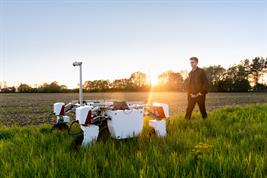
The Leibniz Centre for Agricultural Landscape Research (ZALF), in collaboration with other academic institutions, has published a new study on start-ups in the agricultural sector in the journal Progress in Economic Geography. In it, a research team examines how well so-called agri-start-ups are embedded in existing innovation structures in a region of Lower Saxony that is particularly strongly characterised by agriculture. A key finding: the extent to which innovations from agri-start-ups contribute to sustainability transformations in the region depends heavily on established and well-entrenched structures.
For the study, the researchers conducted a total of 16 guided interviews between January and March 2025. Respondents included individuals from academia, business, public administration, funding bodies and the start-up community. In addition, the interviewees drew network maps to illustrate who is connected to whom and how these relationships function. The analysis focused on five forms of ‘proximity’ between regional actors: spatial, cognitive, social, institutional and organisational. The authors thus describe in concrete terms why the transformative potential of innovations depends not only on good ideas, but also on how their development processes are embedded within an existing environment.
Between proximity and distance: the importance of trust for collaboration
The case region is described in the study as a German location with a particularly intensive agricultural sector. There, many established companies have been working closely together along complex value chains for decades. This closeness builds trust and facilitates collaboration. At the same time, however, it can make it harder for knowledge from new companies to be taken on board. The study shows that agri-start-ups often rely on intermediaries to gain access to key networks in the first place. This can be helpful – but it often also influences the direction in which their ideas develop.
Furthermore, farmers were only mentioned in passing during the interviews. This, too, is an important finding: for if new technology or new business models are to be used on farms later on, agricultural businesses must be involved in innovation processes as early as possible. The authors conclude that start-ups, or rather their founders, who are rooted in the region but have also gained experience outside the existing system, could play a special role. They bring new perspectives without completely losing access to regional, social and value-based relationships.
Why new ideas often take effect only gradually
What is particularly new about the study is its focus on the quality of relationships within a regional innovation system and an entrepreneurial ecosystem – that is, the interplay between actors, networks and institutions. The researchers not only demonstrate which connections the interviewees perceive within this innovation (eco)system, but also how these connections can either foster or limit new developments. Particularly important: close social and (informal) institutional ties among established actors can lead to the emergence of smaller improvements—such as efficiency-focused solutions—rather than fundamental changes. This is socially significant because agriculture faces major challenges—such as climate, environmental and resource protection—and requires not only more efficient solutions, but in some cases also solutions conceived in a fundamentally different way.
“Our findings show that innovation in agriculture does not succeed or fail solely on the basis of good ideas. It is also crucial whether new actors gain access to existing networks—and whether there is room within them for knowledge that does not yet fit with established practices,” says
Katharina Rock from the Leibniz Centre for Agricultural Landscape Research (ZALF) and lead author of the study.
What the researchers conclude
The authors see their findings as indicating that regional networks for agricultural innovation should be broadened. Universities and other research institutions could play an important role in this regard if, in their teaching and research, they not only strengthen economic and (agri)-technical topics but also incorporate environmental and social issues more strongly. However, the study also highlights its own limitations: the direct perspective of start-ups could only be incorporated to a limited extent, as many young companies did not wish to disclose their networks for competitive reasons. Therefore, future research should compare the specific conditions under which regional innovation spaces tend to facilitate minor adjustments or more profound changes in even greater detail.
 Press release as PDF
Further Information:
DOI link to the original publication:
https://doi.org/10.1016/j.peg.2026.100067
Project partners:
- Leibniz Centre for Agricultural Landscape Research (ZALF), Müncheberg
- University of Hohenheim, Stuttgart
- University of Applied Sciences for Social Design, Koblenz
- Georg-August University of Göttingen
Funding information:
The authors state that this work was financially supported by the Konrad Adenauer Foundation, a ZALF grant for the completion of their PhD, the Federal Ministry of Education and Research (BMBF; grant number: 031B0751) and the German Research Foundation (DFG; grant number: 554256072).
Note on the text
This is a summary of the original text generated using artificial intelligence: Rock, K., Schlaile, M. P., Busse, M., & Zscheischler, J. (2026). Agri-startups and their regional embeddedness: A qualitative network analysis on the German ‘Silicon Valley of Agriculture’. Progress in Economic Geography, 4, 100067.
DOI:
https://doi.org/10.1016/j.peg.2026.100067, published Open Access / published under the CC BY 4.0 licence https://creativecommons.org/licenses/by/4.0/
https://creativecommons.org/licenses/by/4.0/.
The text has been carefully reviewed and revised in accordance with ZALF’s
AI guidelines.