July 15, 2026
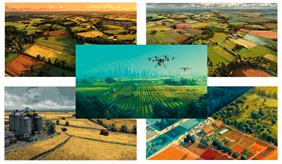
How can we protect our soils while meeting the growing demand for food and bio-based products? A recent study by the Leibniz Centre for Agricultural Landscape Research (ZALF), published in the journal World Futures Review, outlines five possible future scenarios for soil management in Germany. Stakeholders from agriculture, politics, science, and civil society contributed to the study.
Soils store water, filter pollutants, bind CO₂, and serve as habitats for countless organisms. Yet in Europe, 61 percent of soils are already degraded, including in Germany, where more than half of the land is used for agriculture. Intensive farming, climate change, and the growing demand for biomass for food, energy, and materials are putting pressure on soils. The ZALF study shows that without targeted measures, the situation could continue to deteriorate.
Researchers, together with 94 stakeholders from agriculture, politics, science, and civil society, developed and validated five different scenarios for land use in Germany. This process took place over the course of several discussion sessions and workshops. The scenarios were derived from the Shared Socio-economic Pathways (SSPs) for European agriculture and food systems, with a specific focus on Germany and the area of soil health. The SSPs were developed by the climate research community from around 2010 onward and were used prominently in the Sixth Assessment Report of the Intergovernmental Panel on Climate Change (IPCC) in 2021, among other applications. They are a climate research method that helps project possible future developments in order to evaluate measures for environmental and climate protection.
The results of this study underscore that the health of our soils depends not only on technological progress but also on political frameworks and societal priorities.
Five Paths to the Future: From Sustainable to High-Tech
The study presents five possible development paths for German soil management through 2050. Each path illustrates how different socioeconomic, technological, and ecological conditions could impact soil health:
1. Sustainable Path (SMP1): Here, the focus is on environmental protection and the circular economy. Policy measures, green technologies, and a high level of environmental awareness in society strengthen the multifunctionality of soils. This enables soils to better store carbon, filter water, and provide habitat for plants and animals.
2. Slow Changes Path (SMP2): In diesem Szenario ändert sich wenig. Die Landwirtschaft bleibt marktorientiert, und Umweltstandards entwickeln sich nur langsam weiter. Zwar gibt es Fortschritte in der Ressourceneffizienz, doch das volle Potenzial nachhaltiger Bodenbewirtschaftung wird nicht ausgeschöpft.
3. Nationwide Path (SMP3): An isolated agricultural system geared toward national self-sufficiency leads to intensified production. Due to a lack of international cooperation and limited technological progress, many soil functions deteriorate, despite the use of traditional methods such as animal manure.
4.
Divided Path (SMP4): In this scenario, agriculture splits into two worlds: large-scale farms supply the majority with inexpensive but largely unsustainable products, while small, organic farms serve a wealthy minority. Soil quality suffers from the dominance of industrial methods.
5. High-Tech Path (SMP5): Technological progress takes center stage here. Precision agriculture, artificial intelligence, and robotics increase efficiency and can improve individual soil functions, but only through a continuous, resource-intensive use of technology that substitutes for the soil's natural self-regulation rather than activating it. Diverse crop rotations, agroforestry, and landscape elements recede into the background, so that key soil functions such as carbon sequestration remain under pressure despite technological advancement.
Technology alone is not enough
The study shows that technology is an important building block, but not a panacea. Only when it is embedded in supportive political and institutional frameworks can it achieve its full potential. Scenario SMP1 demonstrates that a combination of technological progress and ecological principles best protects soil functions. "Technological solutions such as precision agriculture or digital tools can make soil management more efficient. But they do not replace the need to understand and protect our soils as living systems," explains Lukas Bayer, lead author of the study and a researcher at ZALF. "Without policy decisions and societal commitment, even the best technologies will not be enough to preserve soils in the long term."
Why is this issue so important?
Intensive agriculture, climate change, and soil sealing are taking a toll on the soil. The study makes it clear: without targeted measures, soil conditions will continue to deteriorate. This is particularly critical in light of Germany's bioeconomy strategy, which aims for sustainable, bio-based production.
What implications do the results have?
The scenarios provide a basis for policy decisions. They show that sustainable soil management can only succeed if technology, policy, and society work together. Specific measures could include:
- Reforming agricultural subsidies to reward sustainable soil management.
- Increased investment in soil-conserving technologies and infrastructure.
- Promotion of diversification in agriculture, for example, through diverse crop rotations with a high proportion of legumes, agroforestry or mixed cropping.
- Greater public engagement to raise awareness of the importance of healthy soils.
The study also emphasizes that further research is needed to better understand the complex interactions between technology, policy, and ecological processes.
Project partners:
- System Dynamics Group, University of Bergen, Norway
- Agricultural and Food Policy Group, Thaer Institute at Humboldt University of Berlin
- Researchpreneurs, Heilbronn
- Nordic Agroecological Research Centre, Malmö, Schweden
- Department of Environmental Systems Sciences, University of Graz, Austria
- Faculty of Landscape Management and Nature Conservation, Eberswalde University for Sustainable Development
Further information: DOI link to the original publication:
https://doi.org/10.1177/19467567261441553