August 14, 2026
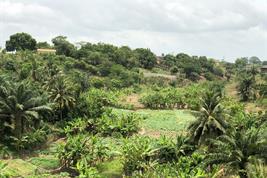
A new study published in Forest Policy and Economics reveals significant gaps between promised and delivered benefits in Ghana's Modified Taungya System, an incentive-based agroforestry program designed to restore degraded forest landscapes. Researchers from the Leibniz Centre for Agricultural Landscape Research (ZALF) together with partners from Eberswalde University for Sustainable Development and Humboldt-Universität zu Berlin examined how 30 farmers in Ghana's Juaso Forest District perceive fairness in decision-making processes and benefit sharing.
The research findings show that all participating farmers initially benefited from growing food crops alongside trees in the Modiefied Taungya System agroforesty initiative. These crops, such as maize, cassava, cocoyam, and vegetables, provide both household food and market income. However, the promised long-term timber revenue remained largely unrealized among farmers. Only a small minority of farmers from three communities (Peaase, Dwandwenease, and Banso) reported receiving partial payments, with one farmer indicating receiving what he believes is approximately one-third of the expected 40% share. Despite official frameworks entitling individuals to 40% of harvested timber revenue and forest fringe communities to 5%, this finding confirms that stakeholders are receiving substantially less than promised.
"This mismatch between policy design and actual implementation undermines farmer's trust in the system," says John Awenva, lead author from ZALF's Development-oriented International Agricultural Research department. "When farmers invest labor and resources over many years but don't receive what was agreed upon, it affects their willingness to continue participating and maintaining the trees."
Procedural Fairness Matters for Conservation Success
The study examined four dimensions of procedural equity: effective participation in decision-making, transparency and access to information, access to justice for conflict resolution, and accountability of decision-makers. Key procedural aspects were perceived as inequitable by farmers. Leadership selection lacked democratic procedures – Taungya Heads (community representatives) were in most cases not elected by group members but rather emerged as early participants and were subsequently nominated by the Forestry Commission. This process limited opportunities for women, who represented 13 of the 30 interviewed farmers, due to cultural norms recognizing men as household heads.
Access to information varied considerably. While most farmers received training on planting techniques through group workshops, some reported difficulty accessing timely information about land allocation procedures and planting schedules. One farmer stated they only learned about land allocation on the day of actual allocation. Conflict resolution mechanisms showed mixed results: boundary disputes between farmers were effectively resolved by Taungya Heads, but disputes involving delayed timber revenue payments or crop destruction by Forestry Commission officials lacked clear resolution pathways.
Why This Matters Beyond Ghana
Forest degradation contributes approximately 20% of global carbon emissions and affects over 1.6 billion people who depend on forests for their livelihoods. Incentive-based conservation programs like Ghana's Modified Taungya System are promoted worldwide as alternatives to strict regulatory approaches. This study is among the first to examine procedural equity – the fairness of decision-making processes – from farmers' perspectives in this context, rather than focusing only on ecological outcomes or benefit distribution.
The findings align with broader critiques of conservation programs globally, which have faced criticism for reinforcing power imbalances and marginalizing disadvantaged groups. Similar challenges have been documented in other Ghanaian initiatives like Community Resource Management Areas (CREMAs), though CREMAs employ more democratic governance structures with formal elections of representatives.
Pathways Forward for More Equitable Conservation
Based on the findings, the study recommends three concrete measures to strengthen procedural equity:
- First, leadership and mediation roles should be separated to reduce conflicts of interest – either by splitting the dual role of Taungya Heads or establishing neutral third-party mediators, drawing on the lessons from CREMAs.
- Second, formal and accessible communication channels need institutionalization, including proper onboarding structure for newcomers, peer-learning platforms, and low-cost digital tools such as SMS alerts for meeting announcements and benefit-sharing updates.
- Third, land allocation procedures should incorporate documented criteria including basic land-quality assessments to ensure plots are suitable for food crop production, reducing the risk of allocating infertile land to farmers.
The researchers note that implementing these changes would require coordination between the Forestry Commission, local communities, and traditional authorities. Costs for digital communication platforms would be relatively low, while establishing neutral mediation structures would require more substantial institutional investment. The study does not provide specific cost estimates, and it remains unclear who would bear these expenses.
Future research should examine how procedural fairness affects long-term ecological outcomes across different conservation contexts. The current findings are limited to one forest district in Ghana and based on farmer perceptions rather than causal analysis. Comparative studies across multiple districts would help determine whether these patterns exist more broadly.
Project Partners:
- Leibniz Centre for Agricultural Landscape Research (ZALF), Müncheberg, Germany
- Humboldt-Universität zu Berlin, Faculty of Life Science, Department of Agricultural Economics, Berlin, Germany
- Eberswalde University for Sustainable Development (HNEE), Department of Forest, Wood, Environment, Germany