August 12, 2026
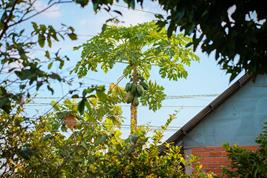
A new scientific review study shows which tree species are most commonly cultivated in agroforestry systems in the tropics and what they are used for. The research was published in the journal “Trees, Forests and People” and shows that fruit trees for personal consumption are the most common use. The Leibniz Center for Agricultural Landscape Research (ZALF) led the study.
The scientists analyzed 254 scientific studies from 1980 to 2025 and identified 3,285 different agroforestry tree species. Agroforestry systems are a form of land use in which trees are intentionally cultivated alongside crops or livestock on the same land. The highest species diversity was found in North and Central America with 738 species, followed by East Africa with 519 species and South America with 483 species. Particularly striking: About 66 percent of the analyzed studies were published only since 2016, indicating a growing research interest in this topic.
The 20 most commonly studied tree species across all tropical regions are mango, avocado, guava, papaya, orange, Grevillea, Leucaena, Gliricidia, kapok, jackfruit, lemon, neem, coffee, fig, cashew, soursop, eucalyptus, coconut, oil palm, and moringa.
Food and Energy Take Center Stage
The analysis clearly shows the primary uses of the trees: 32.7 percent of tree species are used for fruit and food production for subsistence, 15.9 percent are used as firewood and for charcoal, and 13.7 percent provide shade for other crops. These figures underscore that agroforestry systems primarily serve to secure the livelihoods of local communities.
Dr. Apollinaire William of ZALF, the study’s lead author, explains: “Our results show that trees in agroforestry systems are mainly used for fruit and food, firewood, and shade. This directly supports local livelihoods. It is particularly interesting that fruit trees for personal consumption are the most common.”
Native Species Are Unevenly Distributed
An important finding of the study concerns the proportion of native tree species: While many of the commonly used agroforestry trees in tropical regions of Asia and the Americas are native, introduced species dominate in Africa – particularly in East and West Africa. Exceptions include home gardens as well as coffee and cocoa systems, where native species are more common.
In Rwanda, for example, the proportion of native species in home gardens is only 61 percent – the lowest figure documented worldwide. In coffee shade systems, it stands at 64 percent. In other agroforestry systems without specific shade use, the proportion is even lower. By comparison, in Uganda, coffee systems contain about 57 percent native shade trees.
Why this research is socially relevant
Agroforestry systems cover an estimated 1.6 billion hectares worldwide, with about 78 percent of that area located in the tropics. They play a central role in adapting to climate change, especially for smallholder farms. These systems can help reverse land degradation, improve soil fertility and carbon storage, and reduce labor and chemical costs.
The study is particularly relevant in the context of the UN Decade on Ecosystem Restoration (2021–2030). Initiatives such as the Bonn Challenge aim to restore 350 million hectares of degraded land worldwide by 2030. In densely populated African countries, efforts are primarily focused on planting trees on agricultural land through agroforestry systems.
Differences Between the Systems
Research distinguishes three categories of agroforestry systems: shade-based systems (coffee plantations, home gardens), and non-shade-based systems. Home gardens are specialized agroforestry systems located near residential homes with high plant diversity, which are primarily managed for subsistence. Shade-coffee systems are well documented as refuges for biodiversity recovery.
The analysis shows that shade-based agroforestry systems have a higher proportion of native tree species than other systems. Global patterns show the following proportions of native species in home garden systems: West Africa 89 percent, South Africa 83 percent, Southeast Asia 71 percent, South Asia 89 percent, South America 75 percent, North and Central America 89 percent, and East Africa 66 percent.
Nitrogen-Fixing Trees as Important Partners
The study also shows that nitrogen-fixing tree species are often combined with fruit trees, particularly in home gardens and coffee plantations. These trees improve soil fertility and reduce the need for synthetic fertilizers. In Rwanda, for example, avocado, mango, citrus fruits, and guava are combined with species such as Alnus acuminata, Calliandra calothrysus, and Erythrina abyssinica.
Challenges and Opportunities
The dominance of introduced species in many African agroforestry systems cannot be attributed solely to current farmer preferences. Historical factors play a role: During the colonial era and in the period that followed, fast-growing exotic species such as Grevillea robusta and eucalyptus were actively promoted as inexpensive, high-yield sources of timber, firewood, and posts.
At the same time, introduced species can fulfill important functions related to income, energy, and food security. Fast-growing exotic timber and firewood species are often the primary source of posts and firewood and contribute to households’ energy self-sufficiency.
What does this mean for the future?
The results suggest that promoting more sustainable mixtures of different species, including native species, in degraded agricultural areas outside of home gardens and cash-crop systems could be beneficial. The highest agroforestry tree diversity is found in tropical regions near larger natural forests.
Establishing tree nurseries and strengthening agroforestry in agricultural landscapes near natural forests could ensure the conservation of native species’ genetic material and facilitate their dispersal into other neighboring landscapes. This is particularly important, as rural communities often have limited access to forest resources.
Further research is needed to investigate whether widespread generalist tree species can partially replace the ecosystem functions of native species under future climate conditions without jeopardizing biodiversity. In addition, studies should examine the social and ecological suitability of tropical agroforestry tree species across different agroecological zones to better inform landscape restoration guidelines.
Recommendations for Practice
Tree selection should be guided by their ecological adaptability to local conditions, the diverse needs of local communities, and their ecological benefits. Regional lists of native species are needed, based on local ecosystem services, farm type, and climatic suitability, and updated with future suitability maps.
To ensure policy support, the researchers recommend that policy frameworks provide adequate funding and technical support for research and advisory services. This will help farmers optimally design agroforestry systems based on native species, thereby maximizing productivity and profitability. Direct incentives, such as tax breaks or revolving funds for planting trees and maintaining the associated ecological benefits of native species, could accelerate implementation.
Economic Incentives for Farmers
Due to the high initial investments and financial risks involved in establishing an economically viable agroforestry system, farmers need direct subsidies and access to tree seedlings. A revolving fund to support community groups dedicated to promoting native tree species is necessary to manage and expand agroforestry in the long term. Additionally, market linkages and price premiums for products made from native trees can stimulate interest in agroforestry among farmers.
Dr. William, head of the study at ZALF, emphasizes: “Policy frameworks should emphasize reconnecting communities with their local native tree species, which offer multifunctional benefits. Living lab approaches, in which policy frameworks are shaped in collaboration with local stakeholders, and participatory trials focused on the management of native species are particularly important – especially in agricultural landscapes outside of home gardens.”
Project partners:
- Leibniz Center for Agricultural Landscape Research (ZALF), Müncheberg, Germany
- Institute of Ecology, Faculty of Sustainability, Leuphana University of Lüneburg
- Eberswalde University for Sustainable Development (HNEE)
- Department of Agricultural Economics, Humboldt University of Berlin
Funding note:
This publication was made possible thanks to financial support from the German Research Foundation (DFG) as part of the research project “FOR 5501: A Socio-Ecological Systems Approach to Inform Ecosystem Restoration in Rural Africa” (project number 496337053). Open-access funding organized and made possible by Project DEAL.