04.03.2026
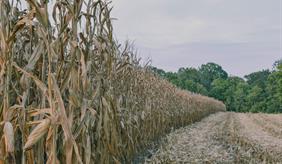
New research shows that the temperature at which extreme heat begins to cause evident yield loss in maize and soybean is not a simple universal number. Using decades of subnational yield records across major breadbaskets, the study derives data-driven critical heat thresholds that vary strongly by region—helping explain why “one-size-fits-all” heat metrics can misjudge both historical and future crop risk.
In a study just published in
Nature Food, researchers tackle a long-standing blind spot in large-scale heat-impact assessments: many previous analyses rely on
fixed temperature thresholds (for example, 30 °C) to define harmful heat exposure. But actual heat sensitivity of crop is shaped by local genetics, environment, and management. By combining county/district-level yield statistics with an extreme-heat metric called extreme degree days (EDDs), the team estimates where and when heat begins to meaningfully erode yields—at fine spatial scale across regions that produce roughly two-thirds of global maize and half of global soybean.
Heat damage begins later than many studies assume—yet varies widely by region Across 20° N–55° N, the study estimates an average critical threshold (EDD threshold) of 34.8 ± 4.0 °C for maize and 33.7 ± 3.9 °C for soybean—but with pronounced geographic heterogeneity. “Our findings challenge the conventional assumption that the EDD threshold is constant; in reality, the key point for heat damage shifts markedly across regions,” said the paper’s co-first author, Dr. Chenzhi Wang, from PB3 CSA group. Higher thresholds cluster in places such as parts of Southern Europe, northwestern China, and the US Midwest for maize, and the North China Plain and central USA for soybean, reflecting how local conditions and management shift realized heat tolerance.
What shapes these thresholds? Climate and management both matter
The authors find that climate factors explain a meaningful share of the spatial variance in thresholds, but management can also shift the “damage onset” point. Where irrigated and rain-fed systems co-exist, irrigation is associated with higher thresholds—about +1.1 °C for maize and +3.5 °C for soybean—consistent with the idea that added water can buffer heat stress by sustaining transpiration and lowering canopy temperature.
Crop models still miss key thresholds—skewing risk estimates
Applying the same threshold-detection approach to simulations from 11 global gridded crop models, the study finds models generally underestimate EDD threshold and compress its geographic spread. That matters because a too-low (and too-uniform) threshold can cause models to label too much of the growing season as “heat-stressed,” potentially relying on error-cancellation to match historical yields—an approach that can break under truly extreme heat.
A warmer future: rising exposure—even with common adaptations
The analysis also shows that how we define “dangerous heat” can systematically bias exposure estimates. Using a spatially uniform 30 °C threshold would overestimate baseline extreme-heat exposure by an average of 6.8 days for maize and 8.2 days for soybean—and the study indicates this bias worsens as warming intensifies. Looking ahead, without adaptation, extreme-heat exposure under the high-emissions scenario SSP5-8.5 increases from the baseline period (2000–2019; roughly ~10 days on average) to ~26 days by end-century (about 26.2 days for maize and 26.0 days for soybean), nearly a threefold rise.
The team further tested common adaptations—such as shifting sowing dates and switching to later-maturing cultivars. These measures can partly reduce extreme-heat exposure, but cannot fully offset the projected increase. The implication is direct: without effective limits on global warming, crops will face increasingly unavoidable heat exposure during the growing season.
Further information on the study can be found
here:
Project Partner:
- Leibniz Centre for Agricultural Landscape Research (ZALF)
- Peking University, China
- Potsdam Institute for Climate Impact Research, Germany
- CSIRO Agriculture and Food, Australia
- Northwest A&F University, China
- International Institute for Applied Systems Analysis, Austria
- University of Illinois, Urbana-Champaign, USA
- China Agricultural University, China
- National Institute for Environmental Studies, Japan
- University of Basel, Basel, Switzerland
- Columbia University, New York, NY, USA
- NASA Goddard Institute for Space Studies, New York, NY, USA
- Nanjing Agricultural University, Nanjing, China
Funding:
This work was supported by Horizon Europe research and innovation programme under the Marie Skłodowska-Curie grant agreement no. 101154967 and the Leibniz Female Professorship Award (application no. P102/2020).