08.03.2026
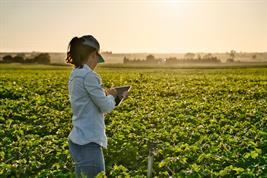
The Food and Agriculture Organization (FAO) of the United Nations is focusing on the topic “Woman Farmer 2026 to accelerate gender equality and women's empowerment in agrifood systems” in 2026 (1). In line with this, we are launching a series on research into women and gender relations in agriculture on International Women's Day.
The FAO draws attention to the multifaceted role of women in agriculture and points out that they continue to face patriarchal structures in the agricultural sector. At the same time, it is impossible to do without them: according to the FAO report “The Status of Women in Agrifood Systems,” women account for a large proportion of the global agricultural workforce, at 36%. In comparison, 38% of working men are employed in the agricultural and food system. In sub-Saharan Africa, the proportion of women in agriculture is higher: 66% of women work in this sector, compared to 60% of men (2). But if women are so central to agricultural production, what recognition do they receive and under what conditions do they work?
ZALF researchers have also asked themselves this question and have conducted several studies on this topic in recent years. To mark the FAO's focus year 2026, these findings will be published here in a series of articles over the coming months. In various thematic clusters, we present studies that have been conducted over the past three years with the participation of ZALF researchers. This first issue of the series focuses on the role of women in food security.
Sources:
(1) FAO International Year of the Women Farmer 2026
(2) Report der FAO „The Status of Women in Agrifood Systems“
Women and food security
Perceptions of Time-Use in Rural Tanzanian Villages: Working With Gender-Sensitive Tools in Nutritional Education Meetings
This study by Izabela Schlindwein et al. examines the influence of gender role perceptions on agriculture, nutrition, and the distribution of household chores in two regions of Tanzania affected by food insecurity.
Women are primarily responsible for childcare, meal preparation, and collecting water and firewood in the studied households. Although women decide what kind of meals are prepared and consumed each day, they remain largely excluded from decision-making processes in food production. Men in the regions studied often control land ownership and have the power to decide how the family income, including that of women, is used.
About the division of labor, the researchers found that the women surveyed generally work longer hours per day and take on more diverse tasks and greater responsibility in the household than men. This leaves them with less time for education, maintaining friendships and networks, or leisure activities.
The study shows that food insecurity is not only related to environmental conditions or agriculture, but also to social structures, cultural role models, and power relations between men and women. The researchers therefore recommend that nutrition programs be designed to be gender-sensitive and that men be more involved in educational measures.
See the study here: https://www.frontiersin.org/journals/sustainable-food-systems/articles/10.3389/fsufs.2020.00007/full
Note on the text:
This text is based on the following study and was stylistically revised with the help of artificial intelligence (LibreChat) in accordance with the AI regulations at ZALF:
Schlindwein IL, Bonatti M, Bundala NH, Naser K, Löhr K, Hoffmann HK, Sieber S and Rybak C (2020) Perceptions of Time-Use in Rural Tanzanian Villages: Working With Gender-Sensitive Tools in Nutritional Education Meetings. Front. Sustain. Food Syst. 4:7. doi: 10.3389/fsufs.2020.00007